Tuesday, November 19, 2013

Sunday, November 17, 2013
A Haitian Boy’s Needless Death From Diabetes
Jean Paul was 12 when he died unnecessarily. Even though he was a diabetic, he might well have lived if not for a tragically simple problem, common in rural Haiti: the glucose test strips available did not match the only glucometer available in the undeveloped district hospital.
Jean Paul could have easily survived if not for the money hungry diabetes testing supply companies. Glucose test strips are a major source of the profit for these companies. Conglomerates like Roche, the leader of the $8 billion a year diabetes testing industry, have made these strips proprietary (each strip fits only into a specific machine). While glucose test strips cost pennies to make, they sell for 50 cents to one dollar per strip, and diabetics use several strips per day. I urge you to help fight for the solution by making more people aware.

It is important because the needs of the many should outweigh the wants of the few. Companies should avoid being greedy and maximizing profits because this is killing many. The solution is simple: Create universal test strips that will work in any available glucometer machine, in the same manner that USB cables can link all brands of computers and devices. Universal test strips would lead to cheaper strips and increased availability. This would ensure that people (like Jean Paul) in rural areas can measure their sugar levels before it is too late. ARTICLE
Jean Paul could have easily survived if not for the money hungry diabetes testing supply companies. Glucose test strips are a major source of the profit for these companies. Conglomerates like Roche, the leader of the $8 billion a year diabetes testing industry, have made these strips proprietary (each strip fits only into a specific machine). While glucose test strips cost pennies to make, they sell for 50 cents to one dollar per strip, and diabetics use several strips per day. I urge you to help fight for the solution by making more people aware.
It is important because the needs of the many should outweigh the wants of the few. Companies should avoid being greedy and maximizing profits because this is killing many. The solution is simple: Create universal test strips that will work in any available glucometer machine, in the same manner that USB cables can link all brands of computers and devices. Universal test strips would lead to cheaper strips and increased availability. This would ensure that people (like Jean Paul) in rural areas can measure their sugar levels before it is too late. ARTICLE
Monday, November 11, 2013
Legen--wait for it--RHETORIC
After carefully analyzing an episode of NBC´s How I Met Your Mother, I noticed that there is much more to it than just plain laughter. It is filled with many figures that are mentioned in Heinrichs´ book. It is these play on words and techniques which are the root to the show´s hilariousness. According to Heinrichs, rhetoric figures of speech help you become more adept at word play, they make you sound clever and can also help persuade.

 Once Daphne (the big women trying to sleep beside Marshall) has had enough of Marshall and his excessive talking, she asks the steward to move her to another seat. Unfortunately the flight is fully booked, so she says: "Hell I´ve been going to pilates, I can just hold on to the landing gear like this".."Well I´ve only signed up for pilates, I actually haven´t started going yet".."I haven´t signed up". This technique is called to edit yourself aloud, it consists of interrupting yourself to correct yourself. According to Heinrichs this makes your audience believe you have a passion for fairness and accuracy. These are just a few examples of rhetorical figures used in the show.
The first figure that I witnessed in the show was a cliché twist. This is when you take your opponents cliché and give the expression a twist by sticking a surprise ending to it. An example of this in the episode is when Marshall is blabbering non-stop about how his and Lilly´s (his wife) dreams were being destroyed (this idea is a cliché). So the women beside him who his annoyed and trying to get some sleep makes the cliché literal and says: "You are destroying a lot of dreams right now". This is a clever way to persuade Marshall to shut up and let her rest.
Next, Ted Mosby makes a rhetorical fallacy in his attempt to convince Lilly that using driving gloves is important. He claims that "in 99.9% of highway accidents, the driver was not wearing gloves". This logic is just absurd and when Lilly catches onto it she says its stupid. Ted then retorts with a pun in another attempt to persuade "Then why is it called the glove compartment?".
 Once Daphne (the big women trying to sleep beside Marshall) has had enough of Marshall and his excessive talking, she asks the steward to move her to another seat. Unfortunately the flight is fully booked, so she says: "Hell I´ve been going to pilates, I can just hold on to the landing gear like this".."Well I´ve only signed up for pilates, I actually haven´t started going yet".."I haven´t signed up". This technique is called to edit yourself aloud, it consists of interrupting yourself to correct yourself. According to Heinrichs this makes your audience believe you have a passion for fairness and accuracy. These are just a few examples of rhetorical figures used in the show.
 Thursday, November 7, 2013
Lionel "Good Boy" Messi
 There is no doubt that Lionel Messi is one of the greatest players of our time, but the real question is: Does he deserve all four Ballon d'Or? The answer is NO. Last year, Messi won the 2012 prize for his outstanding performance, yet his team did not win the league. It was Ronaldo who led Real Madrid to victory in "La Liga" during the 2011-2012 season. Messi did not even lead Barcelona to Champions league glory, Chelsea beat them in the final that year. Some fans argue that he deserved the award because he broke the goalscoring league record. However, when Cristiano Ronaldo broke that same record one year before, Messi had also been awarded the Ballon d'Or. So why is Messi worshipped so much? The answer lies in his decorum
Everybody loves him and thinks of him as the poor guy who grew up with growth hormone deficiency. They think of kid who was given a once in a lifetime opportunity and signed his first contract on a napkin. The general audience feels empathy for him and his initial struggles in life. Messi is also, in the eyes of many (not me), a very humble player who cares for others.
There was a recent outrage in which even Sepp Blatter, the president of FIFA, favored Messi over Ronaldo. During an interview he was asked by a student to choose between Messi or Ronaldo, his response was actually quite expected. He said: "They are both exceptional players but they are totally different...Lionel Messi is a good boy who every mother and father would like to have at home." Here we begin to see why most people tend to prefer Messi. But wait, there is more. "he's a kind man, he's really good, he's a good boy. And that's what makes him so popular and naturally he will always get a lot of votes because he is this nice man"
AHA! This is the reason for his four Ballon d'Or. Messi has been crowned the best player beacuse of his popularity and because the media has began to overlook his flaws rather than putting his performance under a microscope. This just goes to prove the power of decorum and how it can persuade people.
Friday, October 25, 2013
Manipulation at its Best
As I read Thank You For Arguing by Jay Heinrichs, I laughed at the memories of the many lies I have told. This is the first textbook which I do not dread reading thanks to its unique style and content. Because each of his argumentation points is so interesting and perfectly applicable to my life, it is hard to put the book down. The authors examples make me smirk at the slyness of the successful attempts of manipulation.
I have gotten so into this book that I even used one of the tactics this week. My mom asked at what time I wanted to get picked up on Saturday night, and I said 2:30 a.m (even though I wanted 1:30). After debating for a while we then agreed to 1:30, we were both happy, my mom because she thought she had won the argument, and me because I got what I desired.
 Argumentation plays an incredible role in our lives, it surrounds us, toys with our emotions, changes our attitude, and persuades us. It can be used to manipulate others to achieve your goals. If my parents knew that I was reading this book, they would not be very happy, because from now on I will be having things my way.
I have gotten so into this book that I even used one of the tactics this week. My mom asked at what time I wanted to get picked up on Saturday night, and I said 2:30 a.m (even though I wanted 1:30). After debating for a while we then agreed to 1:30, we were both happy, my mom because she thought she had won the argument, and me because I got what I desired.

Tuesday, October 22, 2013
Saturday, October 12, 2013
Junky
 Norton, a thief and friend, arrived at his apartment with a stolen Tommy gun and some morphine. He wanted William to "get rid of it" (pg. 2) so he could earn some money. So Bill went to another thief and friend of his (Jack) who planned "set-ups that would make a stickup sound easy and sure of success" (pg. 3). From their, they go meet Roy and Herman to sell the morphine syrettes. Jack knew that these two men were not good company and such a bad influence that he said: "You are going to want to forget this address" (pg. 3). However, William did not listen.
We can see that Bill is surrounded by people who are always up to trouble. Due to this foreshadowing it is obvious that sooner or later he will be stuck in an unfavorable situation. A few nights after meeting Roy and Herman he made the huge mistake of shooting "junk" for the first time. His experience went as follows: "Morphine hits the backs of the legs first, then the back of the neck, a spreading wave of relaxation slackening the muscles away from the bones so that you seem to float without outlines, like lying in warm salt water. As this relaxing wave spread through my tissues, I experienced a strong feeling of fear "(pg. 6).
 Soon enough, Bill began to sell more and more. He even kept a few boxes with syrettes for himself instead of selling them. After using those up, he bought back what he had sold to Roy for almost twice the price (for personal usage). William is staring to become an addict and we see the habit growing. He and Herman begin to sell large amount of weed but stop after some complications.
It got to a point where Will was "using stuff everyday, or often several times a day" (pg.18). By now we are certain that he had become an addict. He began going to doctors feigning diseases and asking for morphine prescriptions, those who wrote them were called "croakers". Each time it became harder to find these willing croakers because the police kept investigating them. Now that the police is involved we can deduce that things will get nasty.
Vocabulary:
1) affable - (adj.) friendly and easy to talk to
2) sullen - (adj.) used to describe an angry or unhappy person who does not want to talk, smile, etc.
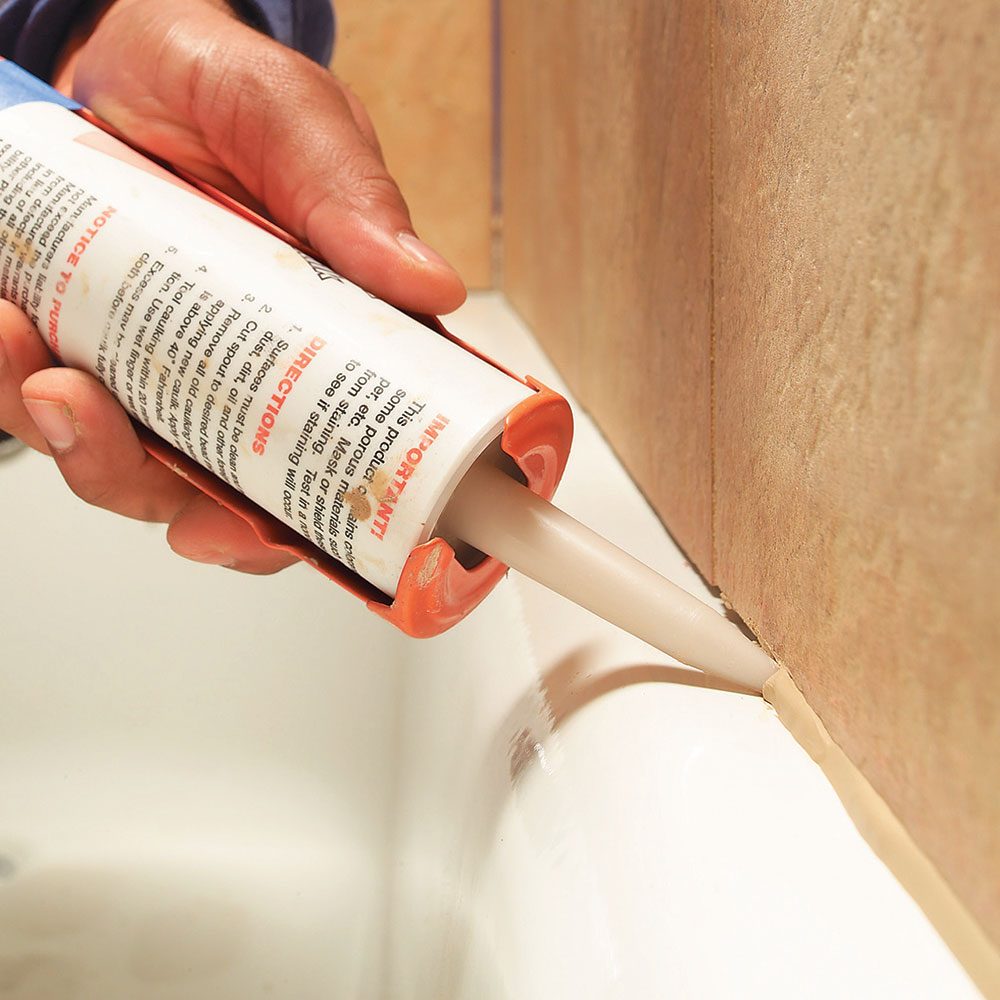
3) caulking - (noun) a waterproof filler and sealant that is used in building and repair to make
watertight
4) garish - (adj.) Obtrusively bright and showy; lurid, colorful

Subscribe to:
Posts (Atom)